
Hanna Puley is at the Centre of Attention
By Hollie Phipps
She’s a three-time Canadian Screen Award winner, the costume designer behind the cultural phenomenon Heated Rivalry, as well as a writer, director and mother of three. Hanna Puley doesn’t chase success – she makes things she loves, and the rest follows.
There is a particular kind of costume designer who, when you watch their work, makes you feel you already know the people onscreen. The shoes are wrong in exactly the right way; the fleece jacket evokes something that you can’t quite name. That is the signature of Hanna Puley, a costume designer whose work operates like a quiet conversation between the screen and the viewer. She recently sat down with BeSpoke to talk about craft, career and community, and what it means to build a body of work without a roadmap.
The theatre foundation
Puley’s path into costume began not on a film set, but in the collaborative chaos of low-budget live theatre: making shows with friends, solving problems with almost nothing, and learning to sell a character in an instant.
“Theatre is such an impressionistic art form – you really have to figure out how to make things work and how to sell things quickly without resources,” she said. “Film is so specific; we have to get so particular with everything. Theatre taught me the quick read.”
That spirit of collaboration and non-attachment to the original idea has never left her. She describes herself as genuinely open to someone else having the better thought, whether that’s a director, a cast member, or someone on her team. It’s a practice, not a platitude.
when things fall intoplace
For a two-time Canadian Screen Award winner, Puley has a remarkably unromantic relationship with milestones. She never had an end goal; for her, the turning point wasn’t a nomination or a premiere. It was simpler than that: it was the moment she started getting paid a living wage for something she was already doing for the love of it.
“I’m not chasing anything,” she said. “Every project, I don’t know if I’m going to get work after this year. None of us know; the industry could collapse. But I think the pleasure of creating each project – and getting paid, sometimes getting paid well – that’s all just adding to the list.”
It’s a philosophy she repeats more than once during our conversation: non-attachment to the outcome. It’s not apathy, but rather the opposite: it comes from a deep investment in the work itself, freed from the anxiety of what it might produce.
The fleece seen around the world
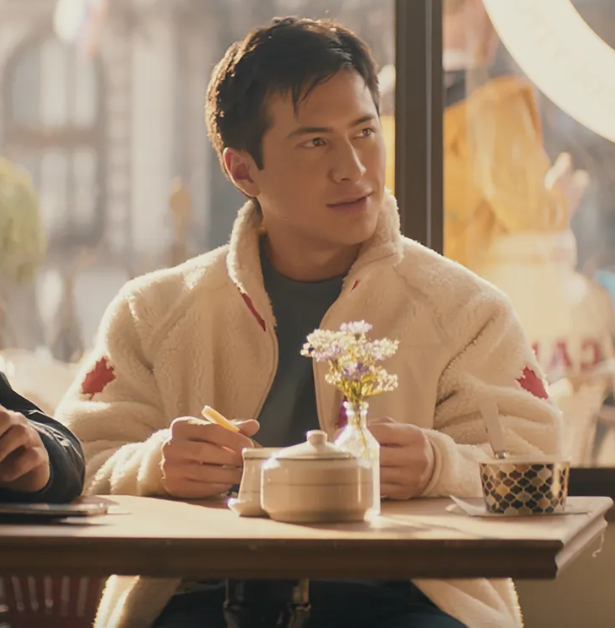
When Heated Rivalry became a global phenomenon – the Roots jacket, the boat shoes, the fleece – Puley found herself at the centre of a cultural moment she hadn’t anticipated and wasn’t entirely sure what to do with.
“We are the curators, in a way,” she said. “We’re creating the visual story of all the bodies you see. So I’m not used to being the centre of attention. It was crazy and super unexpected, and I’m still kind of figuring out how to navigate that.”
As an ally to the LGBTQ+ community, Puley feels grateful to have the opportunity to help tell their stories.
The response to Shane’s boat shoes at the cottage – episode six – is a favourite example. Some viewers felt seen by them, while others were appalled; Puley loved both reactions equally. That is, she explains, the whole point of contemporary costume design: a mirror of society as she sees it, held up for audiences to find their own reflection in.
She’s remained grounded throughout the series’ rise thanks to her three kids, everyday life, and the ticking of ordinary things. The media attention was interesting, and then life went on for her.
The invisible work
Ask Puley what she’s most proud of and she doesn’t mention the awards. She mentions Bird, a short film she wrote and directed. It took six years to finish, with a pandemic, two children, and the biggest productions of her career folded in between.
She describes her approach to contemporary work as psychological and sociological – finding archetypes, grounding characters in people she actually knows, and looking for the shared language between herself, the script, and the viewer. Currently on season two of Overcompensating, she’s leaning into a younger team to bring truth to a Gen Z story – a reminder that good design is also good listening.
On community and CAFTCAD
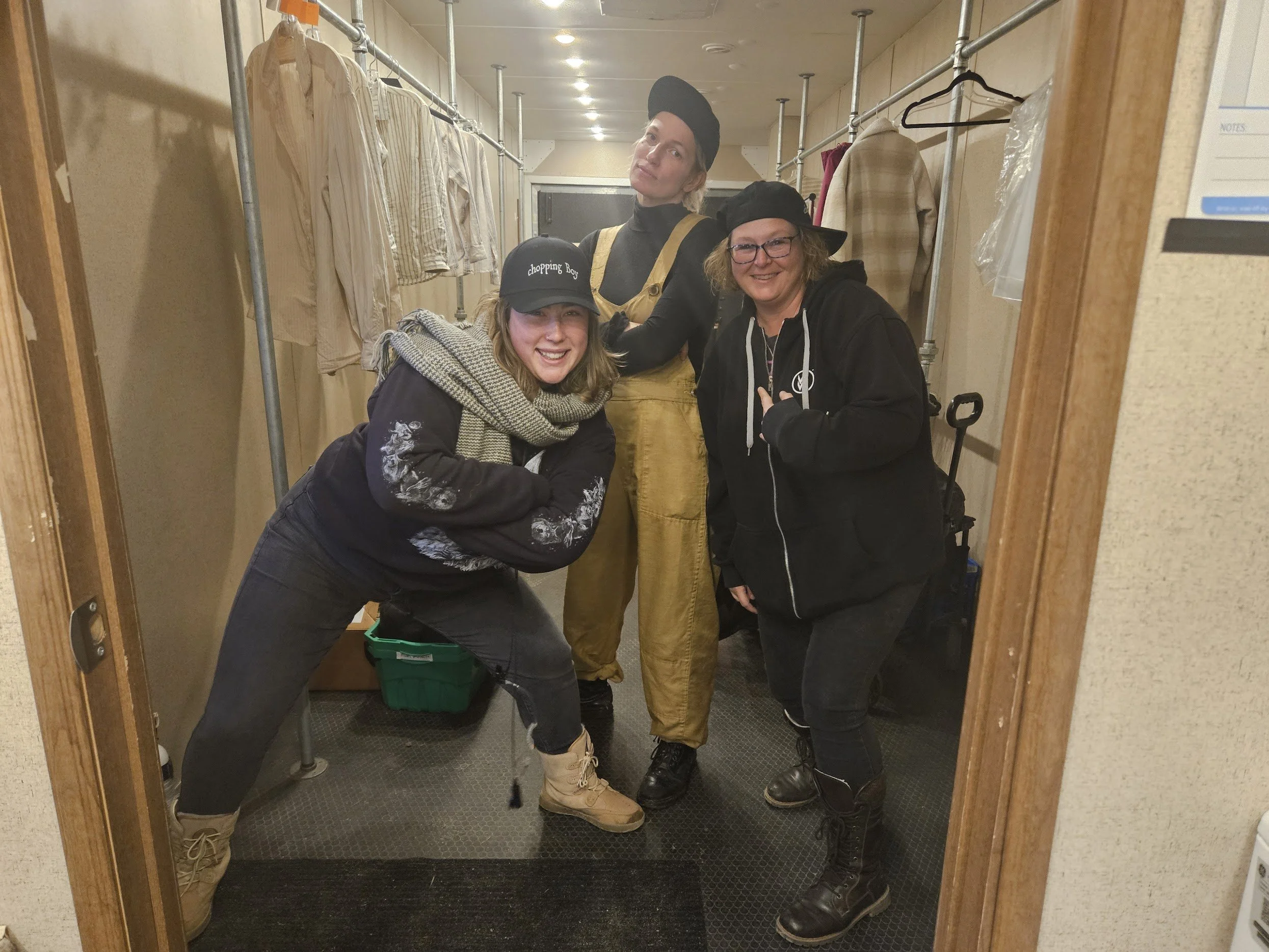
Puley admits she hasn’t always been a joiner – by her own description, she’s figured out much of this industry on her own. But she speaks warmly about what she sees CAFTCAD building: a community where people share resources, knowledge and experiences, and the kind of witnessed understanding that only comes from people who have lived the same thing.
“All this stuff that I really figured out on my own, but I’m seeing people who are further ahead than I was at the same point in their career. Just knowing all of our peers and having access to people who share a similar passion – that’s incredibly valuable.”
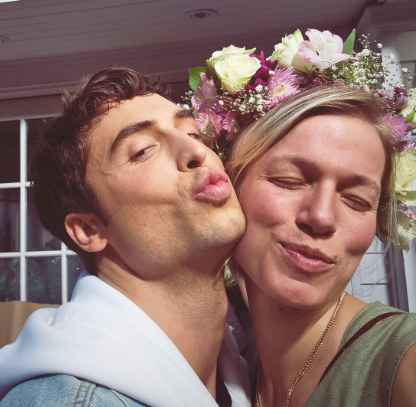
Puley with Overcompensating star Benito Skinner
For those building their own path
Asked what she’d want emerging Canadian costumers to know, Puley returns to the same three words she keeps coming back to: kindness, curiosity, and work ethic.
“Treat every project as if it could be your last. You never know which production manager will hire you on five bigger things down the road.
“If you can’t have fun and you can’t find the joy in it, it should not be the thing you’re doing. Work is also your life. The time you spend at work doesn’t stop ticking away, so you have to keep it fun for yourself.”
She also makes space for the full range of roles in a costume department: the impeccable organization of the costume truck supervisor, the breakdown artist with paint on their fingers, the assistant costume designer who thrives on supporting others. Not everyone needs to design.
“The department is big enough for all of it, and the industry needs all of it.”
The designer she keeps coming back to
When asked about her influences, she doesn’t hesitate to name costume designer Jenny Beavan. The breadth of her work, the colour, the texture, the character – from Mad Max to Sense and Sensibility and everything in between. “She can do it all,” Puley says. “She leans in in a way that I also try to lean in.” It’s as good a description of Puley herself as any.
Hanna Puley is a Canadian production and costume designer for theatre and film. She's won Canadian Screen Awards for her costume work on the films Brother and Blackberry, and for her work on the television series Heated Rivalry. Explore more of her work at www.hannapuley.com
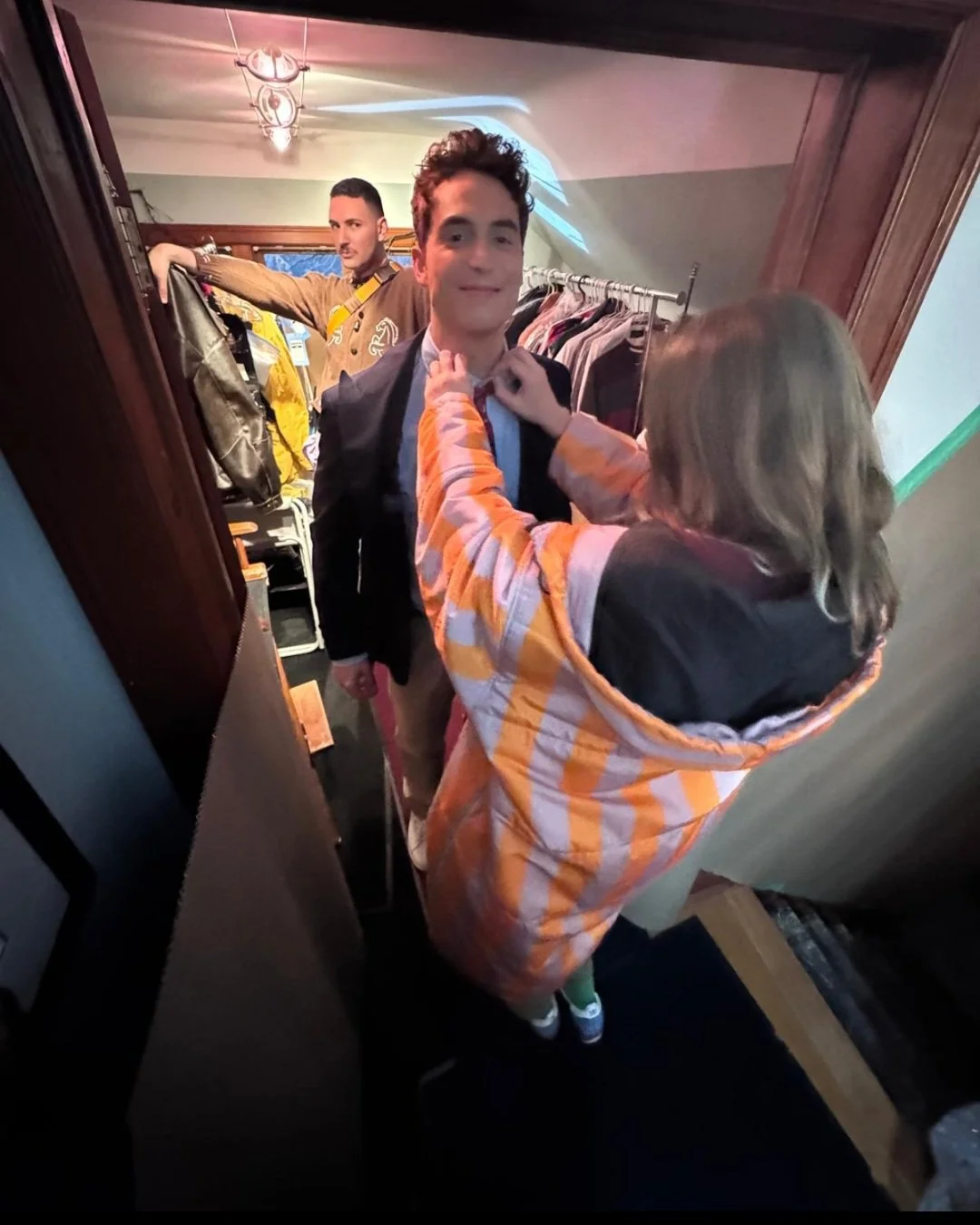
Puley with Overcompensating star Benito Skinner